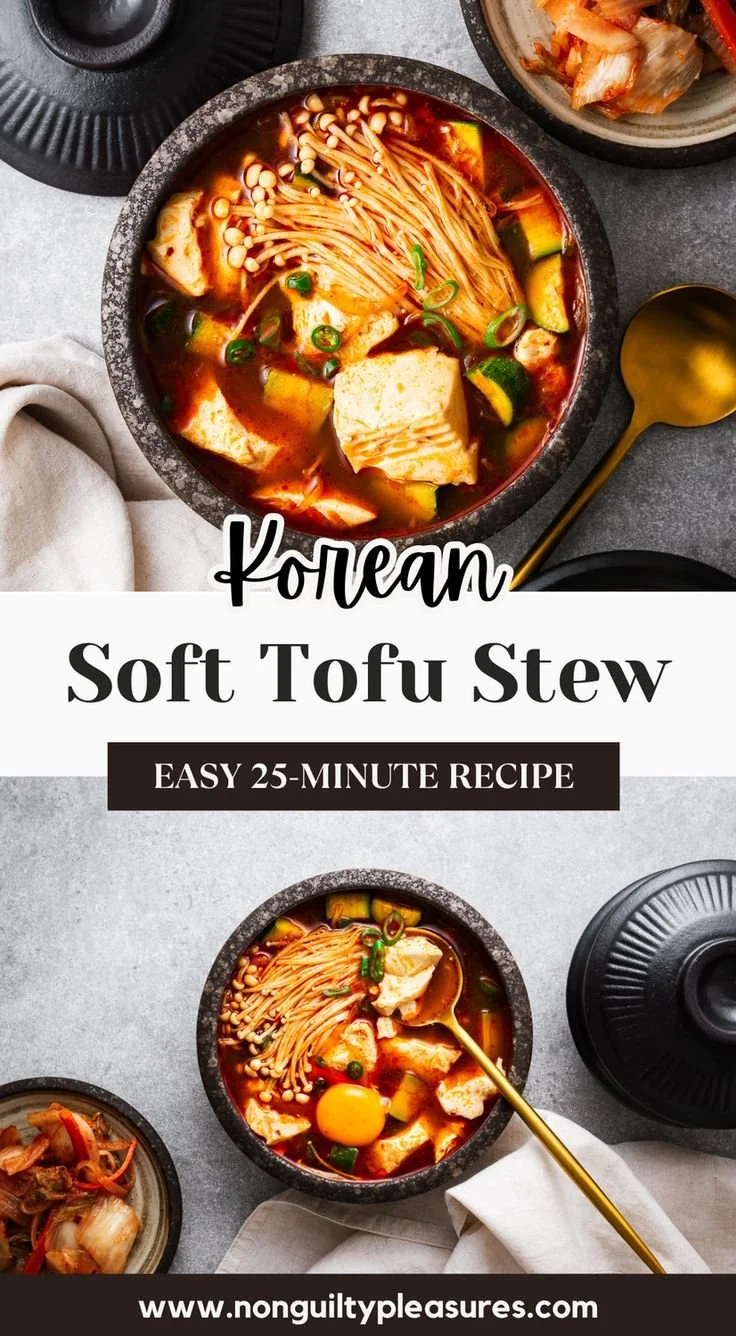
Making Easy Korean Tofu Stew—Spicy Soondubu Jjigae at home is a great way to savor the bold flavors of Korean cuisine without spending all day in the kitchen. This comforting dish combines soft tofu, aromatic vegetables, and a spicy broth, offering a delightful warmth that’s perfect for any day. Whether you’re new to cooking or just need a satisfying meal, this recipe is worth trying.
Why You’ll Love Easy Korean Tofu Stew
- Simplicity: With minimal prep and cooking time, this recipe is ideal for beginners. You can whip it up in no time.
- Versatile Ingredients: You can customize the stew to your liking with various vegetables and proteins, making it a perfect choice for any dietary preference.
- Comforting and Hearty: This stew is not only warming but also filling, making it a comforting option for chilly evenings.
- Authentic Flavor: The use of gochugaru and sesame oil gives the stew a true Korean flavor that’s sure to impress.
- Healthy and Nourishing: Packed with tofu and vegetables, this dish is a wholesome choice that provides a good balance of nutrients.
Recipe Overview
- Prep Time: 10 minutes
- Cook Time: 15 minutes
- Total Time: 25 minutes
- Servings: 4
- Difficulty Level: Easy
Ingredients You’ll Need for Easy Korean Tofu Stew
-
Tofu:
- 1 block of soft tofu – provides a creamy texture that absorbs flavors well.
-
Vegetables:
- 1 zucchini, sliced – adds a mild sweetness.
- 1 cup of mushrooms (shiitake or button), sliced – offer an earthy flavor.
- 2 green onions, chopped – brings freshness and color.
-
Spices and Sauces:
- 2 tablespoons gochugaru (Korean red pepper flakes) – gives the stew its signature heat and color.
- 2 tablespoons soy sauce – adds umami and depth.
-
Aromatics:
- 3 cloves of garlic, minced – enhances the flavor profile with its aromatic qualities.
-
Liquids:
- 4 cups of water or vegetable broth – serves as the base for the stew, use broth for a richer flavor.
-
Oils:
- 2 tablespoons sesame oil – contributes a nutty aroma and flavor.
-
Optional Protein:
- 1 cup shrimp or thinly sliced beef – can be added for extra protein.

How to Make Easy Korean Tofu Stew
-
Sauté the Aromatics:
In a pot, heat 2 tablespoons of sesame oil over medium heat. Add the minced garlic and sauté until fragrant, about 30 seconds. -
Prep the Veggies:
Add the sliced zucchini and mushrooms to the pot. Stir and cook for 3-4 minutes until they soften. -
Add the Spice:
Sprinkle in 2 tablespoons of gochugaru and 2 tablespoons of soy sauce. Stir well for about 1 minute to lightly toast the spices. -
Create the Broth:
Pour in 4 cups of water or vegetable broth. Bring the mixture to a gentle simmer. -
Add Tofu and Protein:
Carefully add the block of soft tofu, breaking it into chunks, along with any optional shrimp or beef. Gently stir to combine. -
Simmer:
Cook for an additional 5-7 minutes until the tofu is heated through and the optional protein is cooked, stirring occasionally. -
Garnish and Serve:
Remove from heat, garnish with chopped green onions, and serve hot with rice or noodles.
Tips for Success
- Choose the Right Tofu: For the best texture, use soft or silken tofu. Avoid firm tofu for this recipe.
- Control the Spice Level: Adjust the amount of gochugaru to suit your preference for heat.
- Don’t Overcook the Vegetables: Keep them slightly crisp to maintain texture and freshness.
- Taste Before Serving: Always taste and adjust the seasoning before serving; you can add more soy sauce if needed.
- Use a Wide Pot: A wider pot allows for even cooking and makes it easier to stir without spilling.
Easy Variations
- Protein Swap: Substitute the protein with tofu crumbles for a vegetarian option or use chicken for a heartier stew.
- Spice Adjustment: For a milder version, reduce the gochugaru or omit it altogether.
- Add More Veggies: Include other vegetables like bok choy or spinach for added nutrition.
- Noodle Option: Serve the stew over cooked noodles for a comforting twist.
- Dairy-Free: This recipe is naturally dairy-free, making it suitable for lactose-intolerant individuals.
What to Serve with Easy Korean Tofu Stew Recipe (Spicy Soondubu Jjigae)
- Steamed Rice: A bowl of warm steamed rice complements the spicy stew and absorbs the flavorful broth.
- Kimchi: The tangy and spicy notes of kimchi pair perfectly, balancing the heat of the stew.
- Korean Side Dishes (Banchan): Serve with small dishes like pickled radishes or seasoned spinach for a complete meal.
- Green Salad: A simple green salad helps to lighten the meal and adds a fresh crunch.
- Noodles: Add noodles like udon or soba to turn the stew into a filling one-pot meal.
Storage and Reheating
- Refrigerator Storage: Cool the stew completely before transferring it to an airtight container; it keeps well for up to 3 days in the fridge.
- Freezer Storage: You can freeze the stew for up to 2 months. Store it in freezer-safe containers but leave space for expansion.
- Reheating: Reheat on the stovetop over medium heat, adding a splash of water or broth if it looks too thick. Avoid microwaving to prevent overcooking the tofu.
- Preserve Texture: If reheating from frozen, thaw in the fridge overnight before warming it up.
Common Mistakes to Avoid
- Not Draining Tofu: If using packed soft or silken tofu, be sure to drain it well to avoid excess moisture in your stew.
- Overcooking Vegetables: Avoid overcooking the vegetables to keep them vibrant and flavorful.
- Skipping Garnishes: Don’t forget the green onions; they enhance both the look and taste.
- Not Adjusting Spice: Always taste the broth before serving and adjust spices as needed to match your preferred heat level.
- Making Too Much: This stew can quickly become too thick if not watched; ensure you maintain the right liquid level as it cooks.
Easy Korean Tofu Stew (Spicy Soondubu Jjigae): Background & Cultural Inspiration
Easy Korean Tofu Stew, or Soondubu Jjigae, is a popular dish in Korean cuisine. It’s deeply rooted in Southern Korean cooking traditions, often enjoyed during family meals. Traditionally, this stew can feature seafood or meat for a heartier option, but the highlight remains the soft tofu, which is celebrated in many cultural dishes. The recipe showcases the staple flavors of Korea, such as gochugaru and sesame oil, making it not only a staple comfort food but also a flavorful reflection of Korean culinary heritage.
Frequently Asked Questions
Can I use firm tofu instead of soft tofu?
While you can use firm tofu, the texture will change. Soft tofu is preferred for its creamy consistency that melts in your mouth.
How spicy is this stew?
The spice level depends on the amount of gochugaru you use; start with the recommended amount and adjust to your taste.
Can I make this stew ahead of time?
Yes, you can prepare it a day in advance. Just make sure to store it properly and reheat it gently on the stove.
What if I can’t find gochugaru?
You can substitute it with a mix of cayenne pepper and paprika, though the flavor won’t be exactly the same.
Can I use vegetable broth instead of water?
Absolutely! Vegetable broth enhances the flavor of the stew, making it richer.
Final Thoughts
Easy Korean Tofu Stew—Spicy Soondubu Jjigae offers a comforting and satisfying way to enjoy a classic Korean flavor right in your kitchen. With simple steps and versatile ingredients, this dish is perfect for any night of the week. Try it out and immerse yourself in the heartwarming experience of Korean home cooking—you might just find a new favorite!